The Short Answer
The Weatherization Assistance Program (WAP) pays for free home energy improvements — insulation, air sealing, furnace repairs, sometimes new windows — for households that meet income limits set by the U.S. Department of Energy. In most states, that means your household income is at or below 200% of the federal poverty guidelines, though some states set the bar higher, up to 60% of the state median income. If you already receive SSI, TANF, or LIHEAP, you typically qualify automatically.
WAP is a different program from LIHEAP. LIHEAP (the Low Income Home Energy Assistance Program) helps pay your heating or cooling bill right now. WAP fixes the underlying problem — a drafty, poorly insulated house — so your bills stay lower for years. They’re run by different agencies (LIHEAP through the Department of Health and Human Services, WAP through the Department of Energy), but many states let you apply for both through the same local community action agency.
How the Program Actually Works
Congress created the Weatherization Assistance Program in 1976, during the energy crisis, on a simple premise: it’s cheaper to fix a leaky house than to keep subsidizing the fuel that leaks out of it. According to energy.gov, DOE reports WAP has improved the lives of more than 7.2 million families since the program began.
Here’s the flow of money and work:
- DOE sends grant funding to states based on a formula that factors in climate, low-income population, and home energy use.
- States pass funding to local agencies — usually community action agencies or nonprofit weatherization contractors — who run the program in your county or region.
- Local agencies do a home energy audit to figure out where your house is losing money: attic insulation, air leaks around doors and windows, an aging furnace, duct leakage.
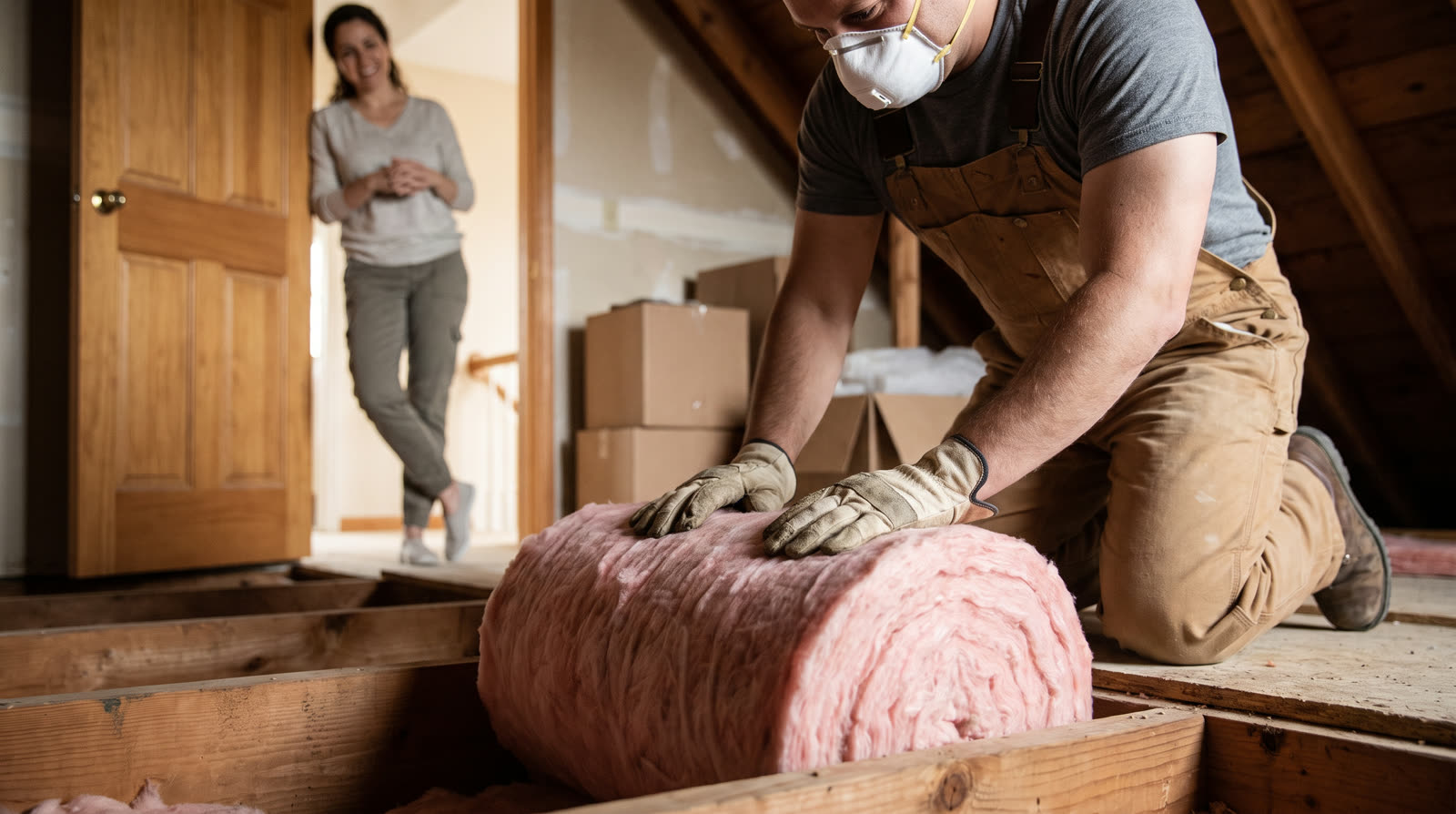
- Crews perform the work at no cost to you. Common measures include attic and wall insulation, air sealing, duct sealing, furnace or water heater repair/replacement, and sometimes minor health-and-safety repairs (like fixing a combustion appliance that’s venting improperly) so the weatherization work can proceed safely.
There’s no cash payment to the homeowner. The value shows up as the work itself, plus lower utility bills afterward. DOE reports that weatherized households save an average of $372 or more per year, based on the program’s National Evaluation — actual savings vary by climate, house type, and what improvements a home needs, so ask your local agency what similar homes in your area typically save.
Who Qualifies
Eligibility runs on income, with two paths in:
Path 1: Income-based eligibility
Your total household income must fall at or below your state’s WAP income limit. Federal rules set the floor at 200% of the federal poverty guidelines, but states are allowed to raise that ceiling to either 200% of poverty or 60% of the state median income — whichever number is higher. That’s why the same household size can qualify in one state and not in a neighboring one. You’ll need to check your state’s specific limit through your local weatherization agency or state energy office.
Path 2: Categorical eligibility
If anyone in your household currently receives one of the following, you’re generally automatically income-eligible for WAP, no separate income documentation needed in most states:
- Supplemental Security Income (SSI)
- Temporary Assistance for Needy Families (TANF)
- LIHEAP benefits in the current program year
This categorical link is intentional — Congress designed WAP and LIHEAP to work together, so a household already proven low-income for one program doesn’t have to re-prove it for the other.
2026 Income Guidance (Illustrative)
The table below uses the 2026 HHS federal poverty guidelines for the 48 contiguous states and D.C., published in the Federal Register on January 15, 2026 and effective January 13, 2026 — these are the base figures state weatherization agencies are using this year. Because states can set their own ceiling above 200%, treat this as a floor, not a hard cutoff — always confirm your state’s actual limit with your local agency.
| Household Size | 100% of Poverty (2026) | 200% of Poverty (common WAP ceiling) |
|---|---|---|
| 1 | $15,960 | $31,920 |
| 2 | $21,640 | $43,280 |
| 3 | $27,320 | $54,640 |
| 4 | $33,000 | $66,000 |
| 5 | $38,680 | $77,360 |
Alaska and Hawaii use higher poverty guideline figures, published separately by HHS. For 2026, the one-person guideline is $19,950 in Alaska and $18,360 in Hawaii; see aspe.hhs.gov for the full current-year tables.
Renters, Owners, and Manufactured Homes
You don’t have to own your home to apply. Renters can qualify for WAP, but the local agency needs written permission from the landlord before doing any work, since some measures (like insulation or window replacement) affect the structure. Many programs also weatherize manufactured (mobile) homes, though the measures used differ from stick-built houses — often focused on skirting, duct sealing, and belly insulation rather than wall cavities.
If you live in subsidized housing, ask your property manager or local agency whether the building has already been weatherized under a separate multifamily energy program; some complexes are covered through the property owner rather than unit by unit.
Priority Groups
Because funding is limited and demand usually exceeds it, federal rules direct states to prioritize certain households when building their waiting lists:
- Households with an elderly member (60 or older, depending on state definition)
- Households with a person with a disability
- Households with children
- Households with high energy burden — spending a large share of income on utilities
- Households with high energy usage — older, inefficient homes
Priority doesn’t guarantee immediate service. It just moves you up the list. Waits can run from a few months to over a year depending on your state’s funding and local agency’s caseload — ask when you apply what the current timeline looks like.
How to Apply
- Find your local agency. DOE’s website (energy.gov) maintains a state-by-state directory of Weatherization Assistance Program contacts, usually a community action agency or the state energy office.
- Ask about income documentation. You’ll typically need proof of income for all household members (pay stubs, benefit award letters, tax returns) or proof of enrollment in SSI, TANF, or LIHEAP.
- Complete the application and wait for an energy audit. A certified auditor inspects your home to identify the improvements that will save the most energy per dollar spent — this is called cost-effectiveness testing, and it’s why not every home gets the same package of work.
- Work gets scheduled. Once your home is approved, a certified weatherization crew performs the upgrades, usually over one to a few days depending on scope.
- Follow-up inspection. Many states do a final quality-control check to confirm the work was done correctly and safely.
A Worked Example
Consider a single retiree in Ohio living alone on Social Security, with a total annual income of $24,000. Ohio’s WAP income limit, like many states, sits at 200% of the federal poverty guidelines for a one-person household — $31,920 using the 2026 figures above. Her income falls comfortably under that limit, so she qualifies without needing to show categorical eligibility.
Her 1970s-built home has no attic insulation and an aging gas furnace that’s losing efficiency. The local weatherization agency’s audit flags air sealing, attic insulation, and furnace repair as the most cost-effective measures for her home. The work is done at no charge to her. Her winter heating bills, which had been running $180–$220 a month, drop into a lower range in following winters — the exact savings depend on weather and usage, and her agency can give her a post-work estimate specific to her home.
If she also received LIHEAP assistance that same year, she wouldn’t have needed to gather income documents twice — her LIHEAP enrollment alone would have satisfied WAP’s income test under categorical eligibility.
Frequently Asked Questions
Can I get both LIHEAP and WAP in the same year?
Yes. They’re separate programs with separate funding, and many households use both — LIHEAP to help with an immediate bill, WAP to fix the home so future bills are lower. Enrollment in LIHEAP can also make you automatically income-eligible for WAP in most states, according to DOE and HHS program guidance.
Is there a deadline to apply for weatherization assistance?
No fixed national deadline exists. Unlike LIHEAP, which often runs on a seasonal application window tied to heating or cooling season, WAP generally accepts applications year-round through local agencies. The practical limit is funding and waitlist capacity, not a calendar date — apply as soon as you think you qualify rather than waiting for a specific season.
What if my income is slightly above my state’s limit?
Ask your local agency anyway. Some states allow exceptions or have a slightly higher ceiling than the federal 200% floor, since states can set eligibility up to 60% of state median income. Local agency staff can tell you the exact number that applies where you live and whether any other qualifying condition — like a household member on SSI — applies to your situation.
Sources
- U.S. Department of Energy, Weatherization Assistance Program: https://www.energy.gov/cmei/scep/wap/weatherization-assistance-program
- U.S. Department of Health and Human Services, Office of the Assistant Secretary for Planning and Evaluation, Poverty Guidelines: https://aspe.hhs.gov/topics/poverty-economic-mobility/poverty-guidelines
- Administration for Children and Families, LIHEAP Program: https://www.acf.hhs.gov/ocs/programs/liheap
- Benefits.gov: https://www.benefits.gov
Related reading
- Social Security COLA for 2026: How Much Bigger Will Your Check Be?
- Medicare Open Enrollment: Dates, What You Can Change, and Costly Mistakes
- Medicare Advantage vs Original Medicare: A Plain-English Comparison