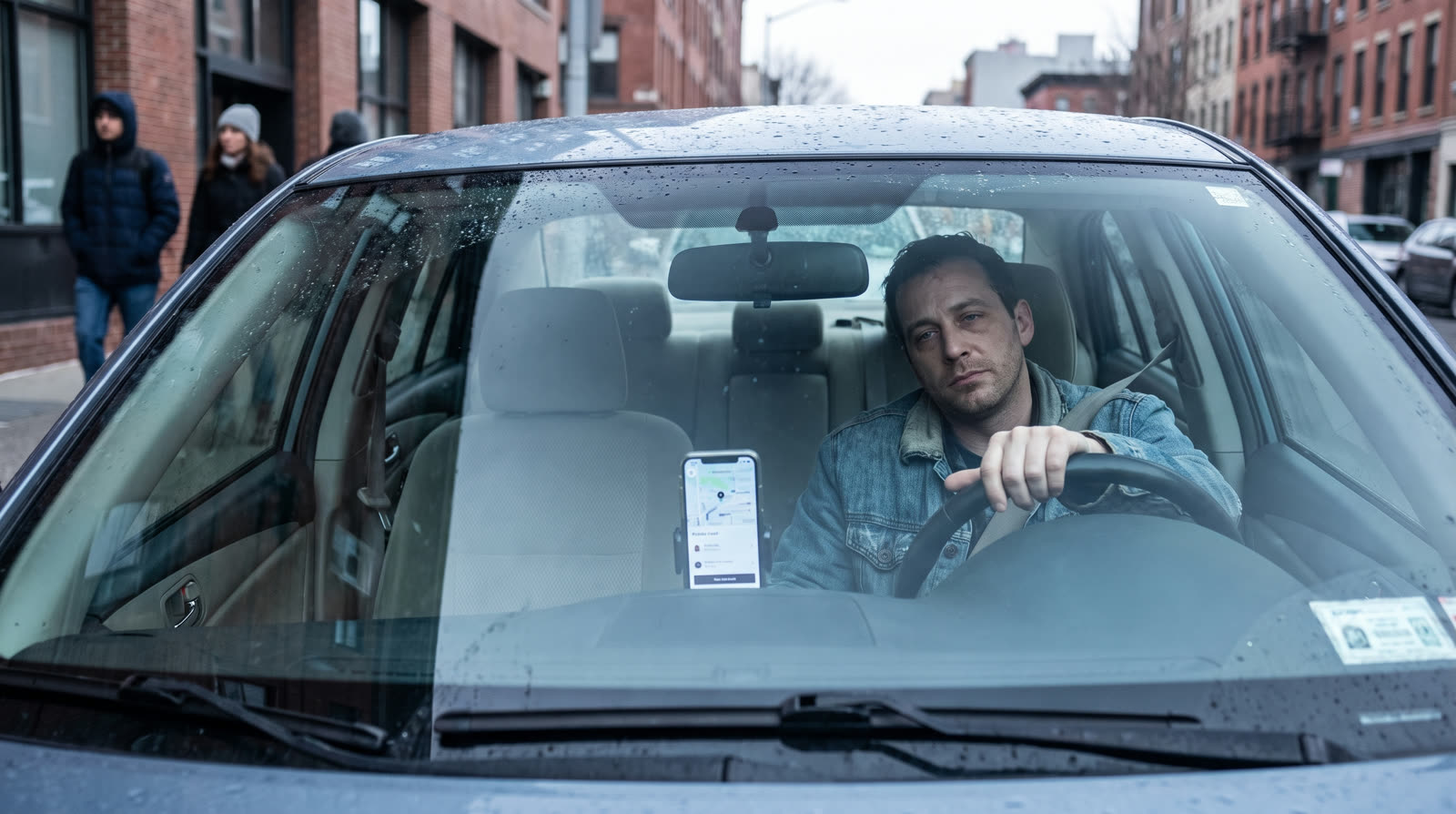
Short answer: if you’re truly self-employed — a freelancer, rideshare driver, independent contractor, or small business owner with no employer withholding unemployment taxes on your behalf — you generally do not qualify for regular state unemployment benefits. The COVID-era program that covered gig workers, Pandemic Unemployment Assistance (PUA), ended nationwide on September 4, 2021, and there is no federal replacement for it as of 2026. Some gig workers can still qualify for regular benefits, but only in specific situations, which we’ll walk through below.
Why self-employed workers usually don’t qualify
Unemployment insurance isn’t a general safety net funded by income taxes. It’s an insurance system. Employers pay federal and state unemployment taxes (FUTA and SUTA) on the wages of their employees, and that money funds state trust funds. When a covered employee loses their job through no fault of their own, they draw on benefits that were, in effect, prepaid on their behalf.
Self-employed people don’t have an employer paying those taxes. If you’re a 1099 contractor, a sole proprietor, or run your own LLC, no one has been contributing to a state unemployment trust fund for you — so there’s no fund to draw from. That’s the plain mechanical reason gig workers and freelancers are excluded from regular state unemployment insurance (UI), according to the U.S. Department of Labor (dol.gov).
This isn’t a loophole or an oversight. It’s how the system was designed in the 1930s, long before app-based gig work existed, and Congress hasn’t rebuilt it to cover independent contractors on a permanent basis.
What PUA did — and why it’s gone
During the pandemic, Congress created Pandemic Unemployment Assistance under the CARES Act (March 2020) specifically because millions of self-employed and gig workers had no unemployment safety net at all. PUA let states pay benefits to people who weren’t otherwise eligible for regular UI, including:
- Independent contractors and gig workers (Uber/Lyft drivers, freelancers, etc.)
- Sole proprietors and small business owners
- Workers who hadn’t earned enough wage history for regular UI
PUA was extended twice — through the Consolidated Appropriations Act of 2021 and then the American Rescue Plan Act — but it was always temporary. It expired for good the week ending September 4, 2021, in most states (about half the states had already ended their participation earlier that summer). Since then, no federal program has replaced it. If you see ads or articles suggesting “gig worker unemployment” is currently available, that’s leftover confusion from 2020–2021, not a current benefit.
Regular state UI vs. PUA vs. today, at a glance
| Feature | Regular State UI | PUA (2020–2021, expired) | Current status (2026) |
|---|---|---|---|
| Who it covered | W-2 employees with sufficient wage history | Self-employed, gig workers, contractors, and others without enough W-2 wages | No PUA-equivalent program exists |
| Funded by | Employer payroll taxes (FUTA/SUTA) | Federal general funds (temporary) | N/A |
| Still available? | Yes, permanently, state by state | No — ended week ending 9/4/2021 | Regular UI only |
| Where to check rules | Your state workforce agency | N/A (expired) | Your state workforce agency; overview at dol.gov |
When gig or self-employed income might still get you benefits
There are a few real paths where self-employed or gig workers can still end up eligible for regular unemployment benefits.
1. You had a W-2 job that ended, and gig work was a side hustle.
Regular UI eligibility is based on your “base period” — typically the first four of the last five completed calendar quarters before you file, according to state workforce agency rules. If you had employee wages during that base period, those wages count toward your benefit calculation, even if you also drove for a delivery app on the side. Your gig income itself won’t count, but it doesn’t disqualify you either.
2. You were misclassified as an independent contractor.
Some workers labeled “1099 contractors” are, under state and federal law, actually employees — especially if the company controls their schedule, tools, and work methods. If you file a UI claim and are denied because you were “self-employed,” you can ask the state to review your worker classification. If the state agrees you were misclassified, it can hold the employer liable for unpaid unemployment taxes and approve your claim retroactively. This determination is made state by state, and the tests used (like the “ABC test” in some states) vary — check with your state labor department for the specific standard used where you work.
3. You quit self-employment to take a W-2 job, then got laid off from that job.
Only the W-2 employment counts toward eligibility, but if you meet your state’s minimum earnings and work-history requirements from that job alone, you can qualify normally. Your prior self-employment doesn’t disqualify you.
4. Self-Employment Assistance (SEA) programs — for people who already qualify for regular UI.
A small number of states offer a Self-Employment Assistance program under federal law (created by the North American Free Trade Agreement Implementation Act of 1993 and permanently authorized in 1998). This is not a way for the newly self-employed to get benefits. It’s an option for people who are already eligible for regular UI and want to spend their benefit weeks starting a business instead of doing a traditional job search. Availability, rules, and whether the program is even currently active vary by state — check your state workforce agency’s website to see if SEA exists where you live.
A worked example
Maria worked as a W-2 marketing coordinator for three days a week and drove for a rideshare app the other two days. She earned $28,000 in W-2 wages over her base period and about $9,000 in gig income the same year. Her employer laid her off in a downsizing.
When Maria applies for state UI, the agency calculates her weekly benefit amount using only the $28,000 in W-2 wages — the rideshare income is ignored entirely because no unemployment taxes were paid on it. Depending on her state’s formula (often roughly 1/26th of high-quarter wages, subject to a state maximum), her weekly benefit would be a fraction of those wages, and the exact amount depends on her state’s specific formula and cap.
If Maria had been fully self-employed with no W-2 wages at all, she would have had no state UI claim to file, because there’d be no wage record to calculate a benefit from. That’s the practical dividing line: it’s not about whether you “worked,” it’s about whether the state has a wage record showing unemployment taxes were paid.
If you don’t qualify: what else exists
If you’re self-employed and lose your main source of income, unemployment insurance isn’t your only option. Depending on your situation, it’s worth checking:
- SNAP (food assistance) — eligibility is based on current household income, not work history, so a drop in self-employment income can open the door. Check with your state SNAP office.
- ACA marketplace subsidies — a lower income year can mean larger premium tax credits at healthcare.gov, but a drop in income by itself no longer opens a Special Enrollment Period — you need a qualifying life event, such as losing job-based coverage, to enroll outside Open Enrollment.
- Earned Income Tax Credit (EITC) — self-employment income counts for EITC purposes; a lower-income year sometimes increases your credit at tax time. Details are on irs.gov.
- SBA disaster or economic injury programs — these come and go based on active declared disasters; check sba.gov for anything currently open in your area.
None of these replace lost income the way UI does, but together they can offset some of the gap while you rebuild client work or find a new contract.
Is Pandemic Unemployment Assistance coming back?
Not currently. PUA was a temporary CARES Act program tied specifically to the COVID-19 public health emergency, and it expired the week ending September 4, 2021. Congress would need to pass new legislation to revive it or create a similar program, and as of 2026 no such program exists. Watch dol.gov for any future federal announcements.
Can I pay into unemployment insurance voluntarily as a self-employed person?
In most states, no — there’s no mechanism for independent contractors to voluntarily pay unemployment taxes into the state system the way self-employment tax funds your Social Security coverage. A few states allow certain business owners to elect limited UI coverage under specific corporate structures, but this is uncommon and rules vary widely. Contact your state workforce agency directly to ask about your state’s rules.
What if I have an LLC or S-corp and pay myself a W-2 salary?
If you’re the owner of an S-corp and you pay yourself as a W-2 employee (with unemployment taxes withheld and paid on your behalf), you may be eligible for regular UI if your business lays you off and you meet your state’s wage and work-history requirements. This is different from being a sole proprietor or 1099 contractor, where no such payroll tax history exists. Each state applies its own rules to owner-employees, so verify eligibility with your state’s unemployment office before assuming either way.
Sources
- U.S. Department of Labor — Unemployment Insurance overview: https://www.dol.gov/general/topic/unemployment-insurance
- U.S. Department of Labor, Employment and Training Administration: https://oui.doleta.gov/unemploy/
- IRS — Earned Income Tax Credit: https://www.irs.gov/credits-deductions/individuals/earned-income-tax-credit-eitc
- USA.gov — Unemployment Benefits: https://www.usa.gov/unemployment-benefits
- HealthCare.gov — Special Enrollment Periods: https://www.healthcare.gov/coverage-outside-open-enrollment/special-enrollment-period/
- U.S. Small Business Administration: https://www.sba.gov
Related reading
- Social Security COLA for 2026: How Much Bigger Will Your Check Be?
- Medicare Open Enrollment: Dates, What You Can Change, and Costly Mistakes
- Medicare Advantage vs Original Medicare: A Plain-English Comparison