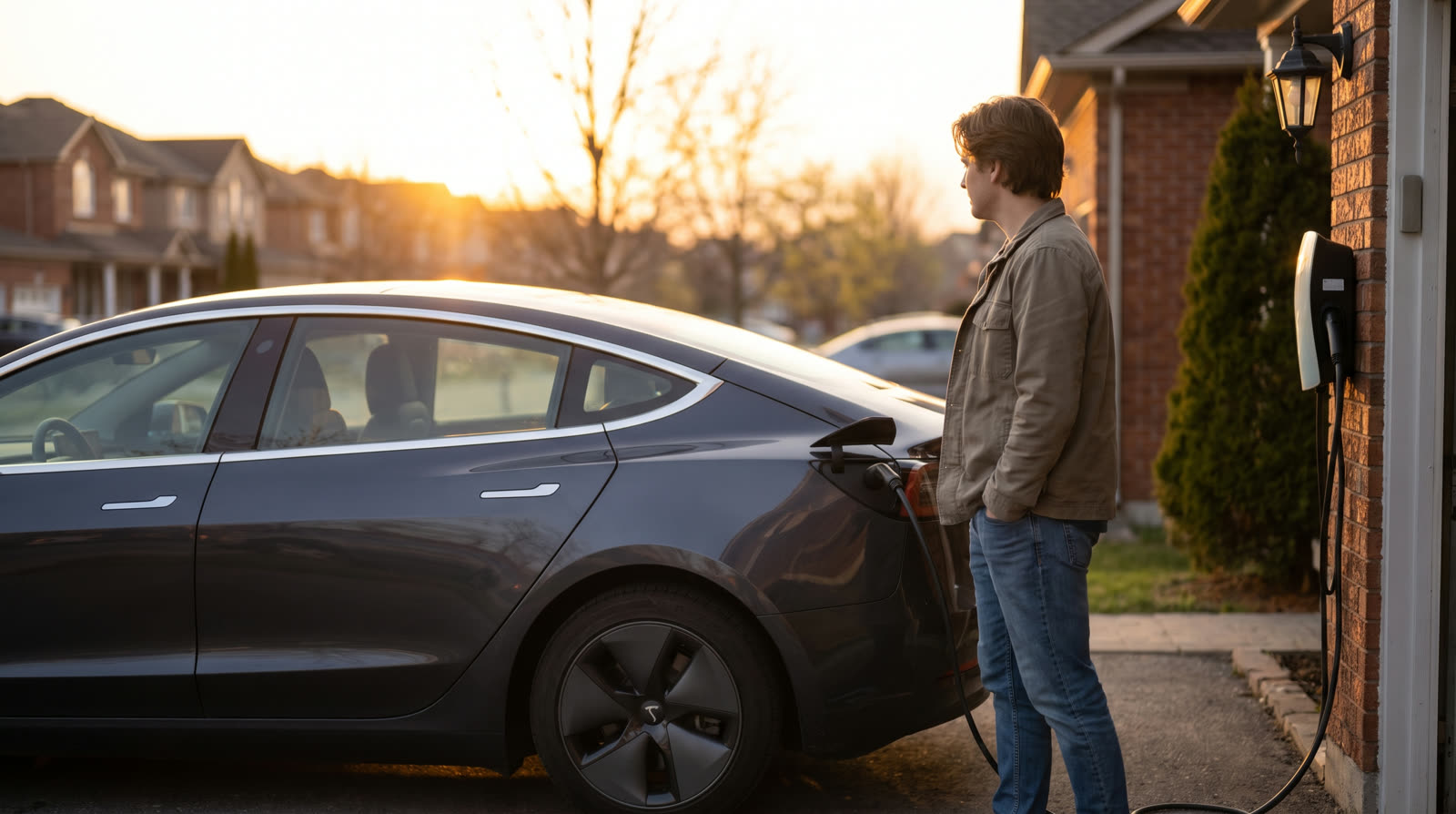
The short answer: as of 2026, there is no federal tax credit for buying a new or used electric vehicle. Congress ended the EV tax credit early through the One Big Beautiful Bill Act, and the last day to acquire a qualifying vehicle was September 30, 2025. If you’re shopping for an EV in 2026, your savings will come from state programs, utility rebates, or manufacturer discounts — not the IRS.
What Happened to the Federal EV Tax Credit
For several years, buyers of new electric vehicles could claim the Section 30D “Clean Vehicle Credit” worth up to $7,500, and buyers of qualifying used EVs could claim up to $4,000 under Section 25E. These credits came from the Inflation Reduction Act of 2022 and were originally scheduled to run through 2032.
That changed in 2025. The One Big Beautiful Bill Act (H.R. 1), signed into law on July 4, 2025, moved up the expiration date for all three major EV-related credits:
- Section 30D — new clean vehicle credit (up to $7,500)
- Section 25E — previously-owned clean vehicle credit (up to $4,000)
- Section 45W — commercial clean vehicle credit (used mainly for fleet and lease purchases)
Under the new law, a vehicle had to be acquired on or before September 30, 2025 to qualify. IRS guidance (FAQs released August 21, 2025, announced in IR-2025-86) defines a vehicle as “acquired” on the date a written binding contract is entered into and a payment is made — a nominal down payment or a trade-in counts. If you met that test by September 30, 2025, you can still claim the credit when the vehicle is placed in service, even if delivery happened after that date. Vehicles acquired on or after October 1, 2025 do not qualify for any of these credits, regardless of the car’s price, battery sourcing, or your income. That rule applies through 2026 and beyond unless Congress acts again, according to IRS.gov.
Why This Matters for Your 2026 Return
If you’re filing a tax return for the 2025 tax year in early 2026, you can still claim the credit — but only for a vehicle you acquired — a written binding contract plus a payment — on or before September 30, 2025 (delivery could come later). The credit is claimed on Form 8936, and if you took it as a point-of-sale discount from the dealer instead of waiting for your refund, that still counts as “claiming” the credit for that tax year.
If you buy an EV any time in 2026, there is no federal credit to claim on your 2026 return, whether you buy new, used, or lease.
What About Leased EVs?
Before the change, many buyers leased EVs specifically because the $7,500 commercial credit (Section 45W) had looser rules than the retail credit — leasing companies could claim it and pass savings to the lessee, sometimes without income or price caps. That workaround ended along with everything else on September 30, 2025. Lease deals advertised in 2026 that mention “EV tax credit included” should be checked carefully; if a dealer is still advertising this, ask them directly how they’re structuring the discount, since the federal credit itself no longer exists.
The Home Charger Credit (Section 30C)
Separately, there’s a credit for installing home EV charging equipment, called the Alternative Fuel Vehicle Refueling Property Credit (Section 30C), worth 30% of the cost, capped at $1,000 per item of qualifying property for individuals. The same 2025 legislation set a firm end date rather than a phase-out: Section 30C is not allowed for property placed in service after June 30, 2026. Because that date has already passed, a home charger installed now does not qualify for the federal credit. Before the deadline, the credit was also limited to property placed in service in an eligible census tract (a low-income community or non-urban area).
Before vs. After: What Changed
| Feature | Rules Through Sept 30, 2025 | Status for 2026 |
|---|---|---|
| New EV credit (30D) | Up to $7,500, subject to price caps ($55K cars / $80K trucks/SUVs), income limits, and battery sourcing rules | Not available |
| Used EV credit (25E) | Up to $4,000 or 30% of sale price, income limits, vehicle had to be 2+ years old and under $25,000 | Not available |
| Point-of-sale discount at dealer | Allowed; credit transferred to dealer, reducing purchase price immediately | Not available |
| Commercial/lease credit (45W) | Up to $7,500, fewer sourcing restrictions, often passed through on leases | Not available |
| Home charger credit (30C) | Up to 30% of install cost, capped at $1,000 per item for individuals, and only in eligible census tracts | Expired — not allowed for property placed in service after June 30, 2026 |
| State EV rebates/credits | Varied by state, existed alongside federal credit | Still exist in many states — rules unchanged by federal law |
Where Savings Still Exist in 2026
The federal credit is gone, but other savings are not:
State tax credits and rebates. States including California, Colorado, New York, and others run their own EV incentive programs, separate from the federal government. Amounts, income limits, and vehicle eligibility vary widely and change often. Check your state’s energy office, revenue department, or environmental/air-quality agency website for current numbers — don’t rely on a federal source for state rules.
Utility company rebates. Many electric utilities offer rebates for buying an EV, installing a home charger, or enrolling in off-peak charging programs. These come directly from the utility, not the government, and are worth checking on your provider’s website.
Manufacturer incentives. Automakers have been offering their own cash-back offers, lease specials, and financing deals to offset the loss of the federal credit. These change monthly and are set by each manufacturer, not by tax law.
Sales tax exemptions. A number of states waive or reduce sales tax on EV purchases. This is unrelated to the federal credit and unaffected by the 2025 law.
How to Check What’s Available to You
- Confirm the federal rule hasn’t changed again. Tax law can move quickly. Check IRS.gov’s clean vehicle credit page before assuming the September 2025 cutoff still stands.
- Search your state’s energy or revenue department site for “EV incentive” or “electric vehicle rebate” to see what’s currently funded — some state programs run out of money mid-year and pause until the next budget cycle.
- Ask your utility if they have an EV rate plan or charger rebate; these are often underused because people don’t know to look.
- Get any dealer claim in writing. If a salesperson says a deal “includes the tax credit,” ask exactly how the discount is being applied and get it itemized on the purchase agreement.
- Talk to a tax professional if you bought before October 1, 2025 and aren’t sure how to claim the credit on your return — Form 8936 has specific documentation requirements, including the vehicle’s VIN.
The Bottom Line for 2026 Shoppers
If you’re comparing electric vehicles for 2026, price your decision the same way you’d price a gas vehicle: sticker price, financing terms, insurance, and fuel/electricity costs, minus only the state or utility incentives you can actually document. The $7,500 federal credit that shaped EV pricing for the past few years is not part of that math anymore.
FAQ
Is there still a federal EV tax credit in 2026?
No. The federal credits for new (Section 30D) and used (Section 25E) electric vehicles ended for any vehicle acquired after September 30, 2025, under the One Big Beautiful Bill Act. There is no equivalent federal credit available in 2026.
I bought my EV in August 2025 — can I still claim the credit?
Yes, if the vehicle met the eligibility rules in place at the time (price cap, income limit, and battery sourcing requirements) and you had a written binding contract and made a payment on or before September 30, 2025 (delivery after that date is fine). You’d claim it using Form 8936 on the tax return for the year the vehicle was placed in service. Check IRS.gov for the exact form instructions for that tax year.
Are state EV incentives affected by the federal change?
No. State tax credits, rebates, and sales tax exemptions are set by state law and were not changed by the federal legislation. Availability and amounts still vary widely by state and can change during the year, so check your state’s official energy or transportation agency website for current details.
Sources
- https://www.irs.gov/credits-deductions/credits-for-new-clean-vehicles-purchased-in-2023-or-after
- https://www.irs.gov/credits-deductions/used-clean-vehicle-credit
- https://www.fueleconomy.gov/feg/tax2023.shtml
- https://www.energy.gov/save/electric-vehicles
- https://www.congress.gov/bill/119th-congress/house-bill/1
Related reading
- Social Security COLA for 2026: How Much Bigger Will Your Check Be?
- Medicare Open Enrollment: Dates, What You Can Change, and Costly Mistakes
- Medicare Advantage vs Original Medicare: A Plain-English Comparison